IELTS Masterclass: Transport Modes
Score: 0/8
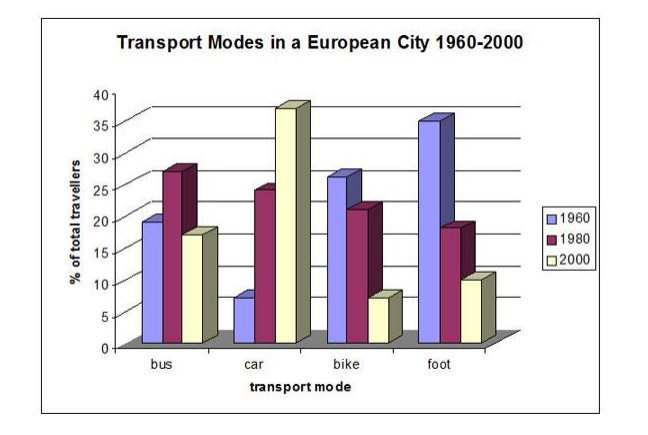
The chart how travellers commuted to work in a European city in three different years from 1960 to 2000.
Overall, the proportion of commuters who used cars steadily over the period, whereas the percentage of people who travelled by bike or on foot dramatically.
In 1960, almost 35% of travellers walked to work. The proportion of those who used bikes and buses was 25% and 18% , while in contrast only about 5% of people travelled by car. However, in 1980 the percentage of people who went to work by bus 26%, making it the most popular means of transport in that year.
Although the proportion of commuters who used cars to go to work saw an to around 23%, the percentage of travellers who used bikes to 20%, and the figure for those who went on foot was slightly lower at 17%.
Over 35% of travellers used cars in 2000, the figures for bus users (16%). The proportion of those who travelled on foot and by bike to 9% and 6% respectively.
Overall, the proportion of commuters who used cars steadily over the period, whereas the percentage of people who travelled by bike or on foot dramatically.
In 1960, almost 35% of travellers walked to work. The proportion of those who used bikes and buses was 25% and 18% , while in contrast only about 5% of people travelled by car. However, in 1980 the percentage of people who went to work by bus 26%, making it the most popular means of transport in that year.
Although the proportion of commuters who used cars to go to work saw an to around 23%, the percentage of travellers who used bikes to 20%, and the figure for those who went on foot was slightly lower at 17%.
Over 35% of travellers used cars in 2000, the figures for bus users (16%). The proportion of those who travelled on foot and by bike to 9% and 6% respectively.
💎 5 Band 9 Structures & Vocabulary
Cấu trúc Commute to work: Di chuyển từ nhà đến nơi làm việc (Thuật ngữ chuyên dụng thay cho “go to work”).
Từ nối Whereas: Trong khi đó… (Từ nối cực mạnh để so sánh hai xu hướng đối lập trong cùng một câu).
Trạng từ Dramatically: Một cách đáng kể/mạnh mẽ (Dùng mô tả sự thay đổi lớn về số liệu).
Cấu trúc Overtaking: Vượt qua… (Dùng khi một hạng mục tăng lên và chiếm vị trí dẫn đầu của hạng mục khác).
Cấu trúc Respectively: Lần lượt là (Luôn dùng khi liệt kê các con số tương ứng với các đối tượng đã nêu).

Leave a Reply