TRI DUC ENGLISH
Reading Practice: What Is Ecotourism?
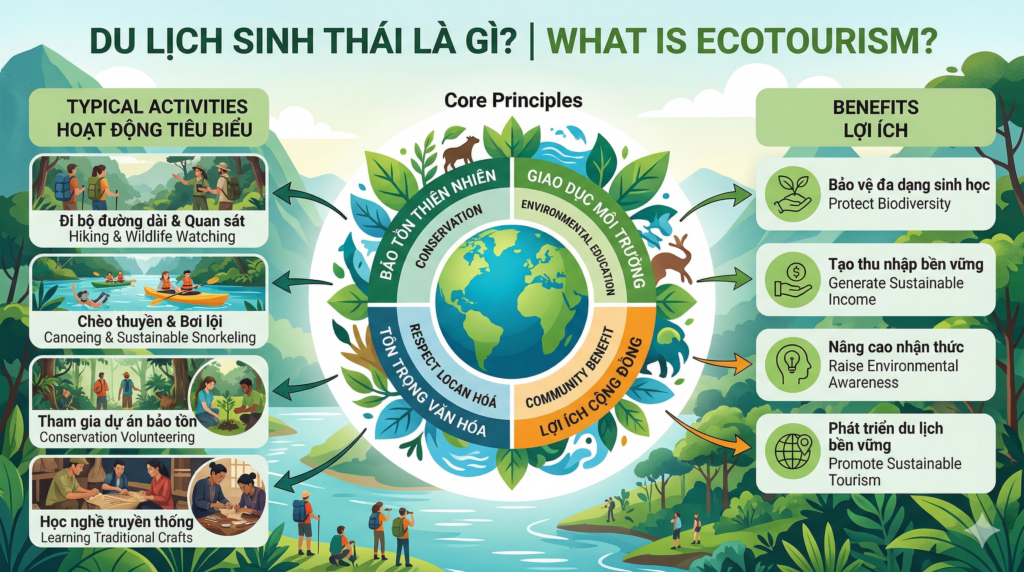
The concept of ecotourism has been gaining publicity over the past couple of decades. It arose out of the “green movement”—a growing interest in developing practices in all aspects of daily life that preserve rather than injure the natural environment. Ecotourists strive to have minimal impact on the places they visit, in terms of both the local ecology and the local culture. Some followers take the concept even further and define ecotourism as travel that aims not only to avoid harming the environment, but also to make a positive contribution to the local ecology and culture.
The types of vacations that fit into the category of ecotourism vary widely. Ecotourism might involve travel to a natural destination such as a national park or a nature preserve to learn about the natural environment and, in some cases, to volunteer on environmental protection projects. It could be a few weeks spent with local artisans learning how to do a traditional craft. Trips that involve hiking or rafting through wilderness areas with no regard for the natural habitats one passes through would not be included in the definition of ecotourism. Neither, of course, would be trips with a focus on hunting.
Ecotourists seek out accommodations that follow environmentally friendly practices such as using renewable resources and recycling. Ecotourists look for hotels and tour companies that hire mainly local staff, keeping tourist dollars within the local economy. Ecotourists might choose to join a bicycling or walking tour rather than a bus tour that adds to air pollution and allows tourists to see the local area only through a barrier of glass windows.
Ecotourists often shun cruise ships, because these are among the biggest culprits in the tourism industry in terms of environmental pollution. Massive cruise ships release large quantities of harmful emissions into the air as well as pollute the waters they sail through with fuel from their engines. The huge numbers of passengers on these ships generate many tons of garbage and wastewater, which is often dumped into the sea. Cruise ships also cause damage to coral reefs and other delicate ecosystems that they travel near. Perhaps in part because of the growing interest in ecotourism, some cruise companies are now making an effort to be more environmentally friendly. These efforts include recycling wastes and using fuel more efficiently. Vacationers who are interested in ecotourism and still get pleasure from cruises can travel with cruise companies that follow these practices.
Because of the growing interest in ecotourism, many companies advertise themselves as ecotourism companies, especially those that offer trips to remote, natural areas, the type of destination that ecotourists favor. Travelers need to be wary and do their research carefully. Not all of these companies follow the principles of ecotourism. Some are simply trying to take advantage of the current interest in this type of travel. The positive side of this, however, is that it may actually be an indication that the movement is gaining in popularity.


Leave a Reply