TRI DUC ENGLISH
Reading Practice: Wheelchair Accessibility Issues
As many as 650 million people worldwide live with some form of physical disability, and about 100 million of the disabled need a wheelchair at least part of the time. Industrialized, higher-income nations in Asia, Europe, and North America are seeing an older population grow more incapacitated as they age, whereas in lower-income countries of Africa, Asia, and Latin America, poverty, conflict, injuries, and accidents account for most disabilities, many of them in children.
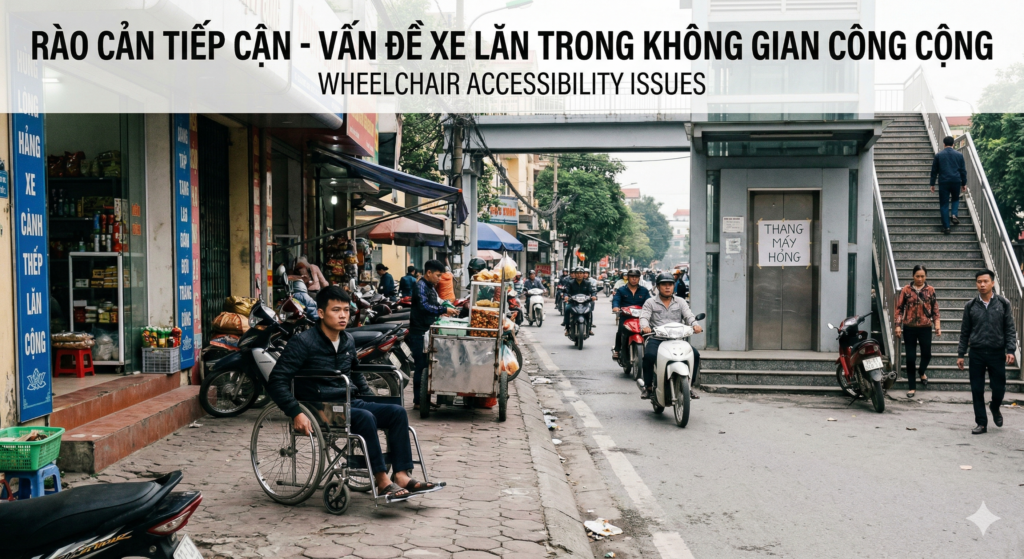
Wheelchairs provide a more independent lifestyle, but they come with their own set of problems: They are wide, unwieldy, and difficult to maneuver in tight spaces, on slippery surfaces, and on steep slopes—not to mention impassable stair steps. Accessibility issues abound at home, work, and school; in recreation activities; and in transportation.
One of the most difficult places to use a wheelchair is the home. The average doorway width of about 76 centimeters (30 inches) falls some 5 to 15 centimeters (2 to 6 inches) short of the space necessary to accommodate a wheelchair. To be accessible to a person in a wheelchair, bathrooms require grab bars in showers and tubs, built-in shower seats, lower sinks and mirrors, and higher toilet seats. Kitchens need lower counters and shelves as well as accessible switches for lights, garbage disposals, and exhaust fans. Also, because most homes have at least a few steps, a wheelchair ramp is a must.
Many countries have laws requiring public buildings—workplaces, stores, restaurants, and entertainment and sports facilities—to be wheelchair accessible. To accommodate wheelchairs, building exteriors need wide sidewalks with curb cuts and ramps. Automatic doors, including those on elevators, must be broad and remain open long enough for a person in a wheelchair to come and go with ease. In a building interior, corridors must be wide enough for a person in a wheelchair and another person on foot to pass side by side, and carpeting should be firm enough for wheelchairs to roll over easily. Restrooms must be wheelchair accessible, too. Although many countries have made these improvements, many more have yet to follow their example.
With appropriate technology, some wheelchair users can drive cars, although getting in and out of a vehicle while in a wheelchair usually necessitates a portable ramp. Many cities have subway and bus systems that accommodate wheelchairs, and the list is growing. For example, Beijing updated its subway system for the 2008 Olympics, providing disabled riders there access to it for the first time.
In most developing countries, a major concern is not so much wheelchair accessibility as access to a wheelchair. Growing public awareness is contributing to less expensive types of wheelchairs being designed for specific environments—for example, chairs capable of maneuvering across dirt roads and rugged terrain but lightweight and compact so they can fold up to fit in crowded spaces, such as the aisle of a bus. These wheelchairs also must be affordable and constructed of locally available materials for easy repair.
The number of people needing a wheelchair is expected to increase by 22 percent over the next decade, with most of the increase coming in developing countries, where fewer than 1 percent of those in need now have access to one.


Leave a Reply