TRI DUC ENGLISH
Reading Practice: Learning Styles
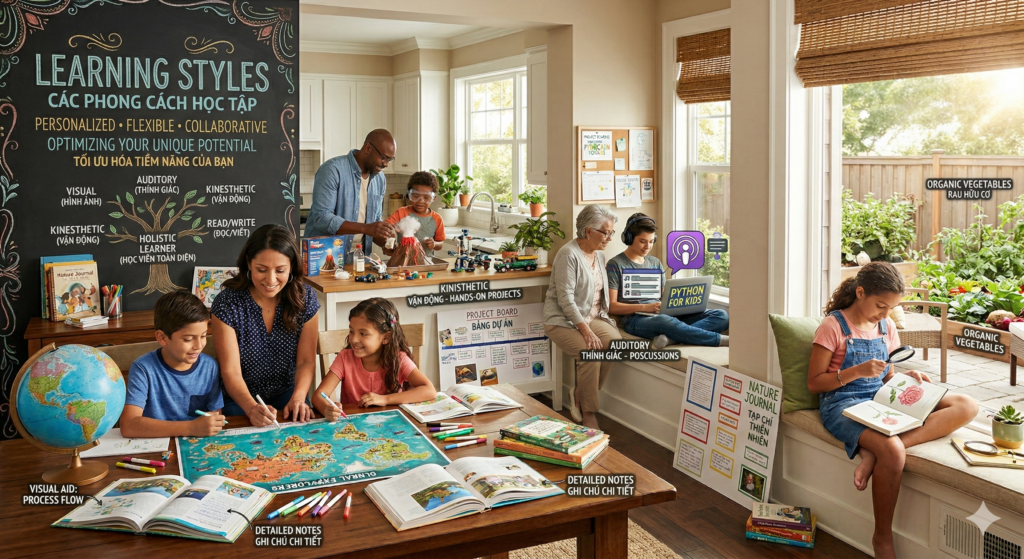
There are three basic types of classroom learning styles: visual, auditory, and kinesthetic. These learning styles describe the most common ways that people learn. Individuals tend to instinctively prefer one style over the others; thus each person has a learning style that is dominant even though he or she may also rely somewhat on the other approaches at different times and in different circumstances.
Visual learners prefer to sit somewhere in the classroom where no obstructions hinder their view of the lesson. They rely on the teacher’s facial expressions and body language to aid their learning. They learn best from a blend of visual displays and presentations such as colorful videos, diagrams, and flip-charts. Often, these learners think in pictures and may even close their eyes to visualize or remember something. When they are bored, they look around for something to watch. Many visual learners lack confidence in their auditory memory skills and so may take detailed notes during classroom discussions and lectures.
Auditory learners sit where they can hear well. They enjoy listening and talking, so discussions and verbal lectures stimulate them. Listening to what others have to say and then talking the subject through helps them process new information. These learners may be heard reading to themselves out loud because they can absorb written information better in this way. Sounding out spelling words, reciting mathematical theories, or talking their way across a map are examples of the types of activities that improve their understanding.
Kinesthetic learners may find it difficult to sit still in a conventional classroom. They need to be physically active and take frequent breaks. When they are bored, they fidget in their seats. They prefer to sit someplace where there is room to move about. They benefit from manipulating materials and learn best when classroom subjects such as math, science, and reading are processed through hands-on experiences. Incorporating arts-and-crafts activities, building projects, and sports into lessons helps kinesthetic learners process new information. Physical expressions of encouragement, such as a pat on the back, are often appreciated.
In addition to these traditional ways of describing learning styles, educators have identified other ways some students prefer to learn. Verbal learners, for example, enjoy using words, both written and spoken. Logical learners are strong in the areas of logic and reasoning. Social learners prefer to learn in groups or with other people, and solitary learners prefer to work alone. Research shows that each of these learning styles, as well as the visual, auditory, and kinesthetic styles, uses different parts of the brain. Students may prefer to focus on just one style, but practicing other styles involves more of the brain’s potential and therefore helps students remember more of what they learn.
Teachers who present their lessons using varied techniques that stimulate all learning styles expose students to both their dominant and less preferred methods of learning, aiding them to more fully reach their potential as learners.


Leave a Reply