IELTS Speaking Part 3
Skyscrapers & Urban Design
Analyzing Vertical Architecture, Land Scarcity, and the Social Impact of High-Rise Living
Topic Vocabulary
Scarce
/skeəs/ (adj)
Available in small quantities; hard to find (especially urban land).
Vibrancy
/ˈvaɪ.brən.si/ (n)
The quality of being full of energy, life, and activity.
Distinguishing features
(n)
Characteristics that make a city or building different from others; unique identity.
Simulations
(n)
Digital models used to test how buildings will react to earthquakes or wind.
Heterogeneous
/ˌhet.ər.əˈdʒiː.ni.əs/ (adj)
Consisting of parts or people that are very different from each other.
Class Distinction
(n)
The social and economic divide between different groups in a society.
Hastily Erected
(adj phrase)
Buildings put up very quickly, often without enough care or attention to safety.
Space Constraints
(n)
Limitations on the amount of available physical area for construction.
*Click cards to hear pronunciation
Advantages (Pros)
- Efficient use of scarce and valuable land.
- Contributes to urban vibrancy and modern image.
- Safety tested by computer simulations for stability.
- Provides higher standards of convenience and accommodation.
- Serves as a national or regional symbol of progress.
Disadvantages (Cons)
- Ruining distinguishing features; cities look the same.
- Negative impact on rural landscapes and natural skylines.
- Intensifies social problems like class distinction.
- Hastily erected buildings may sacrifice safety for profit.
- Creates a more heterogeneous and potentially alienated lifestyle.
Structural Knowledge Quiz
Question 1
What technology is used to ensure skyscrapers can withstand earthquakes?
Question 2
Why is there a risk of buildings being “hastily erected”?
Discussion Practice (Tự luận)
1. Positive & Negative Aspects
“Exemplify some of the positive and negative aspects of modern buildings.”
Modern high-rise buildings offer a pragmatic solution to the issue of scarce land in mega cities. On the positive side, they provide high standards of accommodation and contribute to a city’s vibrancy. However, a major downside is the loss of distinguishing features. Many skyscrapers are mere glass boxes with no real character, which spoils the unique appearance of traditional skylines. Furthermore, the development of luxury high-rises can intensify class distinction, as only the wealthy can afford the “view from the top.”
2. Maintaining Historical Background
“Why do you think cities should maintain their own historical background?”
Maintaining a city’s historical background is crucial for cultural cohesion and preserving a sense of identity. Historic buildings act as a physical legacy that reflects the customs and traditions of past generations. When a city maintains its history, it prevents the urban environment from becoming homogeneous and soulless. A historical background provides the “social glue” that connects residents to their roots, ensuring the city remains a unique regional symbol rather than just another modern construction site.
3. Replacement Trend & Future Houses
“Why are more buildings being replaced with tall ones? What might future houses look like?”
The replacement of old buildings with skyscrapers is primarily driven by space constraints and skyrocketing land values. To accommodate growing populations, cities must build vertically. While this ensures efficient use of land, it is often a negative development if hastily erected buildings compromise safety.
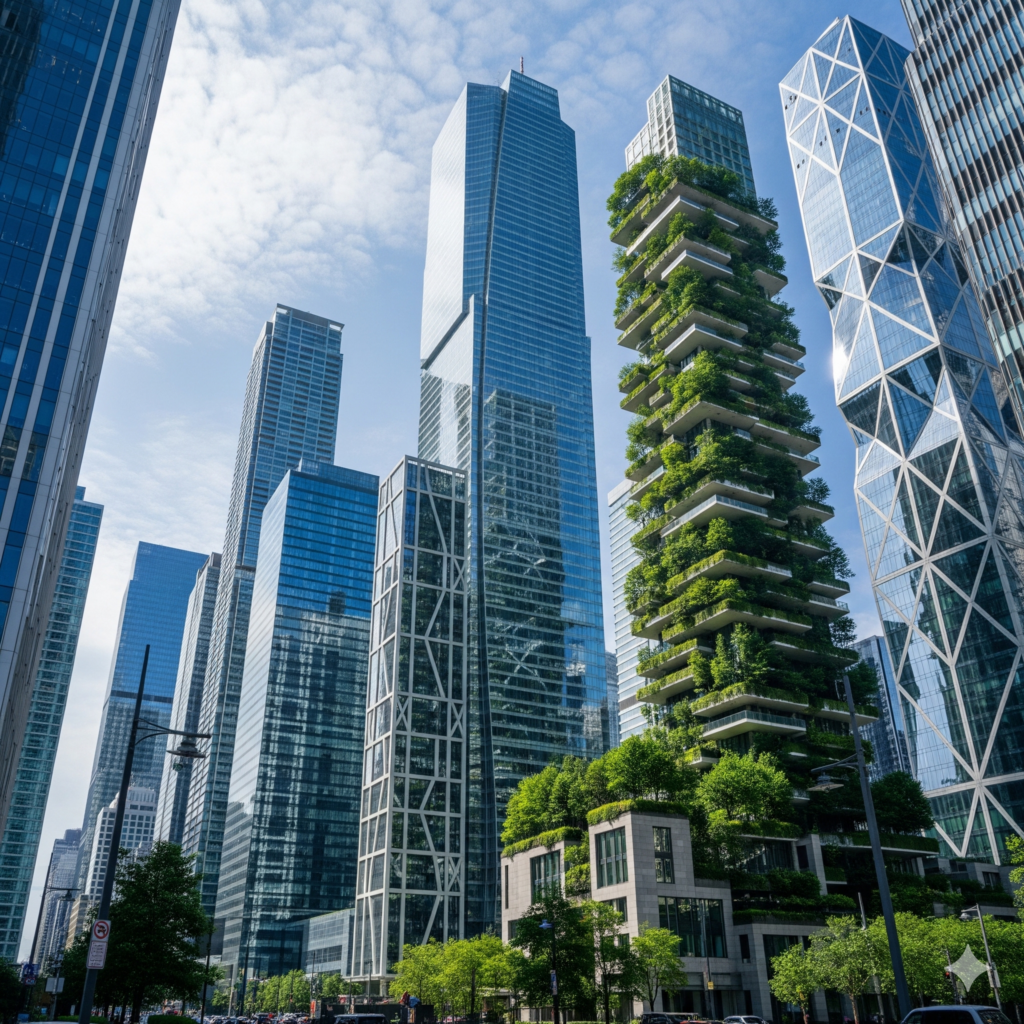
In the future, I imagine houses will be even more technologically advanced, possibly modular and designed through computer simulations to be 100% sustainable. They may look like “vertical forests,” integrating green spaces to mitigate the negative impact of concrete on our well-being.
In the future, I imagine houses will be even more technologically advanced, possibly modular and designed through computer simulations to be 100% sustainable. They may look like “vertical forests,” integrating green spaces to mitigate the negative impact of concrete on our well-being.
4. Skyscrapers for Space Constraints
“Do you think skyscrapers are a good way to deal with space constraints in urban areas?”
Skyscrapers are an inevitable necessity given current urban growth patterns. They are the only way to provide enough floor space for millions of people to live and work in centralized hubs.
However, being a “good way” is subjective. While they solve the physical problem of space constraints, they can create psychological ones, such as feelings of isolation or a lack of community spirit. For skyscrapers to be a truly good solution, architects must focus on creating shared social spaces within the buildings to avoid making city life feel heterogeneous and detached from nature.
However, being a “good way” is subjective. While they solve the physical problem of space constraints, they can create psychological ones, such as feelings of isolation or a lack of community spirit. For skyscrapers to be a truly good solution, architects must focus on creating shared social spaces within the buildings to avoid making city life feel heterogeneous and detached from nature.
Tri Duc English
© 2024 Educational Material – Topic 53: High-Rise Buildings & Architecture

Leave a Reply