IELTS Speaking Part 3
Generation Gap & Society
Evaluating Conflicts, Cultural Norms, and Bridging the Divide Between Youth and the Elderly
Topic Vocabulary
Cultural Norms
(n)
Standards or rules regarding what is acceptable in a society (e.g. respect for elders).
Comm Breakdown
(n)
A failure to exchange information, resulting in a lack of understanding.
Shared Values
(n)
Beliefs and principles that are held in common by a group or community.
Turbulent
/ˈtɜː.bjə.lənt/ (adj)
Involving a lot of sudden changes, confusion, or violence.
Filial Duty
(n)
The responsibility of children to respect and take care of their parents.
Self-made
(adj)
Rich or successful because of your own work, not because of family money.
Mistrust
/ˌmɪsˈtrʌst/ (n/v)
A feeling that you should not trust someone or something.
Residential Care
(n)
Care for people in a residential setting (like a nursing home).
*Click cards to hear pronunciation
Causes & Effects
Causes
- Tech-familiarity gap
- Differing cultural norms
- Divergent life experiences
- Conflicting opinions/values
Effects
- Mistrust between ages
- Comm breakdown
- Family instability
- Societal fragmentation
Bridging the Gap
- Public education about intergenerational understanding.
- Revising and reinforcing shared values.
- Viewing old people as a “treasure” of history and mores.
- Encouraging community participation across all ages.
Generation Gap Quiz
Question 1
Which of the following is a primary cause of the gap between youth and parents today?
Question 2
What is “filial duty”?
Discussion Practice (Tự luận)
1. Conflict & Tech Gap
“What are the main reasons for conflicts between adolescents and their parents? How does tech play a role?”
Conflicts between adolescents and parents often stem from a fundamental communication breakdown. This is exacerbated by differing cultural norms and life experiences. In the modern era, electronic technologies act as a significant barrier; youth are typically digital natives, while parents may struggle to adapt…
2. Status Shift
“Young people have gained more status and power while older people have lost. What are the causes?”
This power shift is primarily driven by the “knowledge economy.” Today, technical competence and innovation are more highly valued in the labor market than traditional seniority. As youth dominate the tech-driven think-tanks and startup cultures, they accumulate wealth and influence faster than previous generations…
3. The Role of the Elderly
“‘Old people are the biggest treasure of each community.’ How do you understand this?”
I understand this to mean that the elderly are the living archives of a society’s history, traditions, and shared values. They provide a sense of identity and continuity that prevents cultural poverty. In families, they offer guidance and protection based on decades of lived experience…
4. Government Care vs. Filial Duty
“Should governments provide free care, or should individuals use their savings and filial duty?”
This should be a shared responsibility. While filial duty remains a core moral principle, the financial burden of residential care can be overwhelming. I believe governments should provide basic nursing through taxpayers’ funds… However, families should also provide personal affection.
5. Youth: A Turbulent Period
“In what sense is youth the most turbulent period of life? How can parents help children become self-made?”
Youth is a turbulent period because it involves intense physical, intellectual, and social transitions. Adolescents often grapple with failed expectations and the pressure to fit into peer groups. To help them become self-made, parents should focus on character building rather than just protecting them from failure…
6. Social Isolation of the Elderly
“Elderly people can become socially isolated. What should be done to solve this?”
To combat isolation, we must create more opportunities for community participation that involve both young and old. Public education should promote a “culture of respect” where the elderly are actively invited into social events. Integrated community centers where seniors can share their folklore and skills can bridge the gap…
7. Bridging the Gap through Traditions
“Can traditions help bridge the gap or do they make it wider?”
Traditions are a unifying force if they are viewed as a bridge to shared identity. They allow the youth to understand their ancestry. However, if traditions are enforced too rigidly without accounting for the fast-paced changes in modern life, they can widen the gap…
Tri Duc English
© 2024 Educational Material – Topic 48: Generation Gap (Full Suite)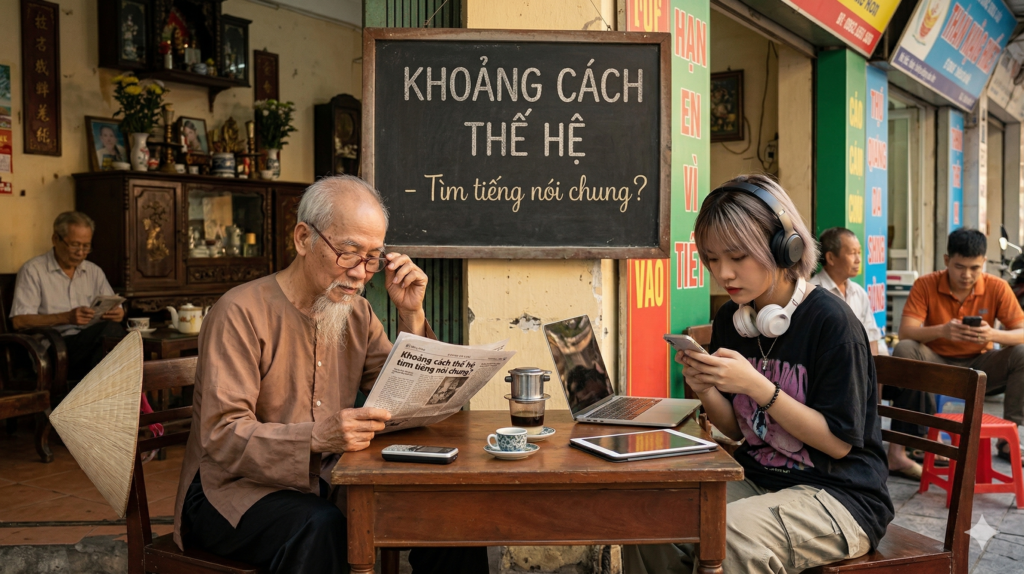

Leave a Reply